

Intel and Nvidia are making common cause in the future: AMD is showing itself to be combative and also holds up against it with Strix Halo. for example, there will be server CPUs from Intel that can directly address Nvidia’s HPC GPUs via NVLink, but also consumer SoCs that will appear with CPU tiles from Intel and GeForce tiles from Nvidia.
AMD counter Nvidia-Intel corporation with Strix Halo with a disruptive roadmap against “India”
CRN had the chance to ask a few questions to Jason Banta, AMD Corporate VP of Product Management. Not surprisingly, Banta was “very convinced of its own roadmap” and its ability to compete with the united competition (Intel + Nvidia: “India”).
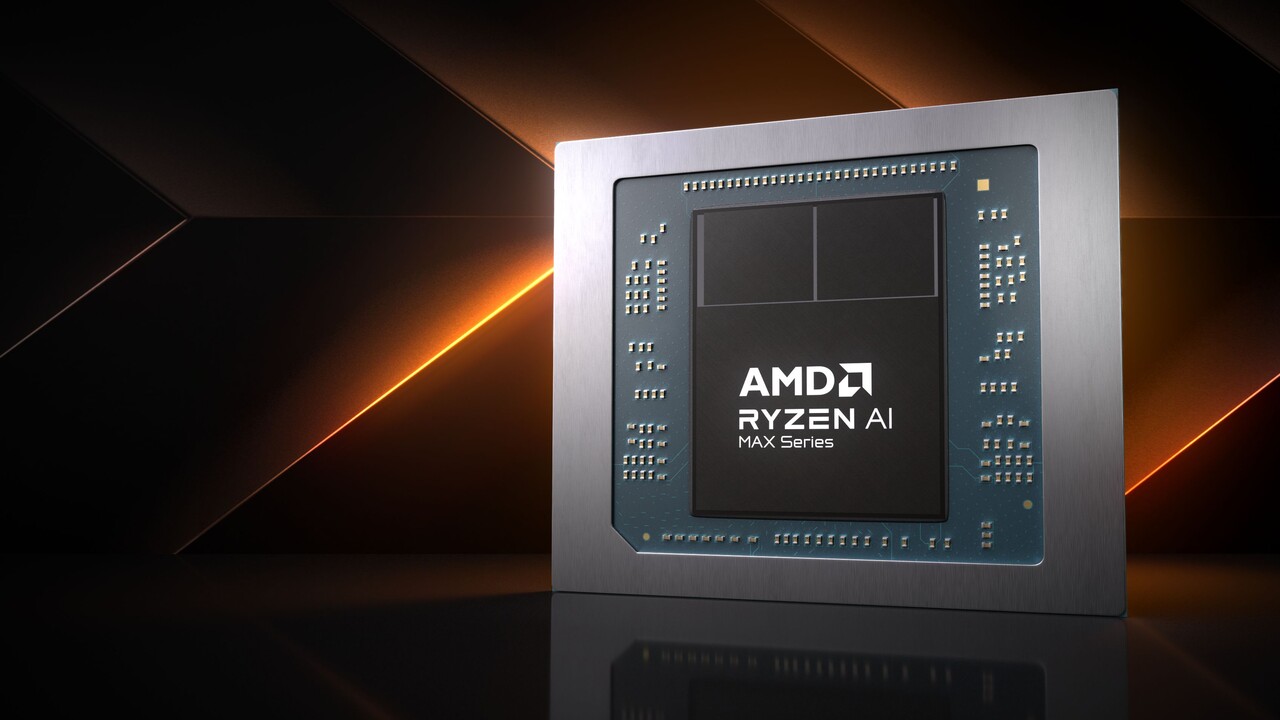
Banta explicitly listed Strix Halo (details): the particularly strong APU with Zen-5 cores and up to 40 CU strong RDNA 3.5 graphics unit, which can address up to 128 GB of RAM, of which up to 96 GB can be addressed as VRAM. This product would have defined a completely new category and such disruptive approaches would be maintained in the future.
We're very confident in our road map. We've done some very exciting things. You've seen ‘Strix Halo’ products that are really category-defining products. And so that's how we think about our road map: We want to continue to provide disruptive technology. We've got great solutions going into notebook, desktop, handheld, other form factors, so we're very confident in the ability to compete there.
Jason Banta in an interview with CRN
In fact, AMD had been paying attention to the presentation at CES 2025 with Strix Halo and even enjoyed a clear victory over Nvidia’s then still current mainstream GPU flagship with reference to particularly large AI models that no longer fit into the VRAM of an RTX 4090.
However, the number of partners was small at the start and the market orientation was not entirely clear: in addition to two workstations with an AI focus, there was also a gaming tablet from Asus. Only now are the first products coming onto the market – nine months after the presentation. As a rule, these are micro-PCs and not notebooks, but their focus is still not entirely clear: should developers use them to continue developing on the AMD platform, which is still limited in terms of software compared to Nvidia, or gamers who are looking for maximum performance in minimal space at a relatively high price?
Recently also successful in the business segment
As a further argument that AMD does not need to worry, Banta also lists the great progress of its own products in the consumer and business environment.
However, these past successes will certainly not protect AMD from an alliance of Intel and Nvidia. It is indeed the products that will have to convince customers.
Investors are not worried about AMD at the moment in any case: at the time of the announcement of the partnership, the stock was down by high single digits, but is currently up by ten percent again.
